Introduction
Deep Learning, a subset of Machine Learning (ML), has emerged as a game-changing technology that enables significant advancements in various fields. In this blog, we explore how Deep Learning empowers three cutting-edge technologies: Computer Vision, Natural Language Processing (NLP), and Automated Predictions. By harnessing the capabilities of Deep Learning, these technologies have revolutionized industries, transformed user experiences, and paved the way for unprecedented innovation.
1. Deep Learning in Computer Vision
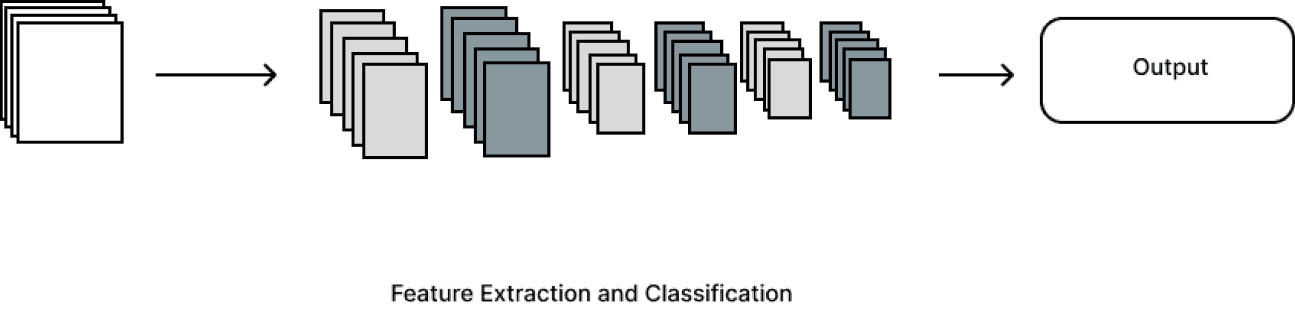
Deep Learning in Computer Vision: Computer Vision involves extracting meaningful information from visual data, such as images and videos. Deep Learning, particularly Convolutional Neural Networks (CNNs), has revolutionized Computer Vision by enabling accurate image classification, object detection and localization, semantic segmentation, and image generation.
1.1 Image Classification
Deep Learning models can automatically classify images into predefined categories with remarkable accuracy. CNNs learn hierarchical representations of visual features, enabling accurate recognition and classification of images.
1.2 Object Detection and Localisation
Deep Learning-based object detection models, like Faster R-CNN and YOLO, can identify and locate objects within images or videos in real-time. These models have immense applications in autonomous vehicles, surveillance systems, and robotics.
1.3 Semantic Segmentation
Deep Learning techniques, such as Fully Convolutional Networks (FCNs), enable pixel-level segmentation by assigning semantic labels to each pixel in an image. This allows for accurate identification and differentiation of objects and regions within an image.

2.Deep Learning in Natural Language Processing (NLP)
Natural Language Processing focuses on the interaction between computers and human language. Deep Learning has transformed NLP by enabling language understanding, sentiment analysis, machine translation, and question-answering systems.
2.1 Language Understanding
Deep Learning models, such as Recurrent Neural Networks (RNNs) and Transformers, can process. Deep Learning Models understand natural language, allowing for tasks like sentiment analysis, named entity recognition, and text classification.
2.2 Machine Translation
Deep Learning-based models, such as Sequence-to-Sequence models, have revolutionized machine translation by generating accurate and fluent translations across multiple languages.
These models have significantly improved translation quality and user experiences.
2.3 Question Answering Systems
Deep Learning techniques, including attention mechanisms and memory networks, have enhanced question-answering systems. These models can comprehend questions and provide relevant and accurate answers based on large amounts of textual data.
3. Deep Learning in Automated Predictions
Deep Learning models can analyze financial data, identify patterns, and make predictions related to stock market trends, credit risk assessment, fraud detection, and algorithmic trading.
3.1 Financial Predictions
Deep Learning models can analyze financial data, identify patterns, and make predictions related to stock market trends, credit risk assessment, fraud detection, and algorithmic trading.
3.2 Healthcare Predictions
Deep Learning techniques are transforming healthcare by enabling predictions in areas such as disease diagnosis, treatment planning, medical imaging analysis, and personalized medicine.
3.3 Manufacturing Predictions
Deep Learning models can analyze sensor data from manufacturing processes to predict equipment failures, optimize maintenance schedules, and enhance overall operational efficiency.
Conclusion
Deep Learning has unlocked the potential of three transformative technologies: Computer Vision, Natural Language Processing (NLP), and Automated Predictions. By leveraging Deep Learning techniques, industries are witnessing unprecedented advancements in image recognition, object detection, language understanding, translation, sentiment analysis, and predictive analytics. As Deep Learning continues to evolve, it promises to reshape industries, improve user experiences, and drive innovation in the digital age. Embracing the power of Deep Learning is the key to unlocking new possibilities and achieving breakthroughs in a wide range of domains.
[elementor-template id=”3498″]