
Introduction
Artificial Intelligence (AI), Machine Learning (ML), and Deep Learning (DL) have emerged as groundbreaking technologies, revolutionizing various industries by automating processes, extracting insights from data, and enabling intelligent decision-making.
In this blog, we delve into the concepts of AI, ML, and DL, exploring their differences and interconnectedness. We also highlight their use cases across industries, demonstrating the transformative power of these technologies
Understanding Artificial Intelligence (AI)
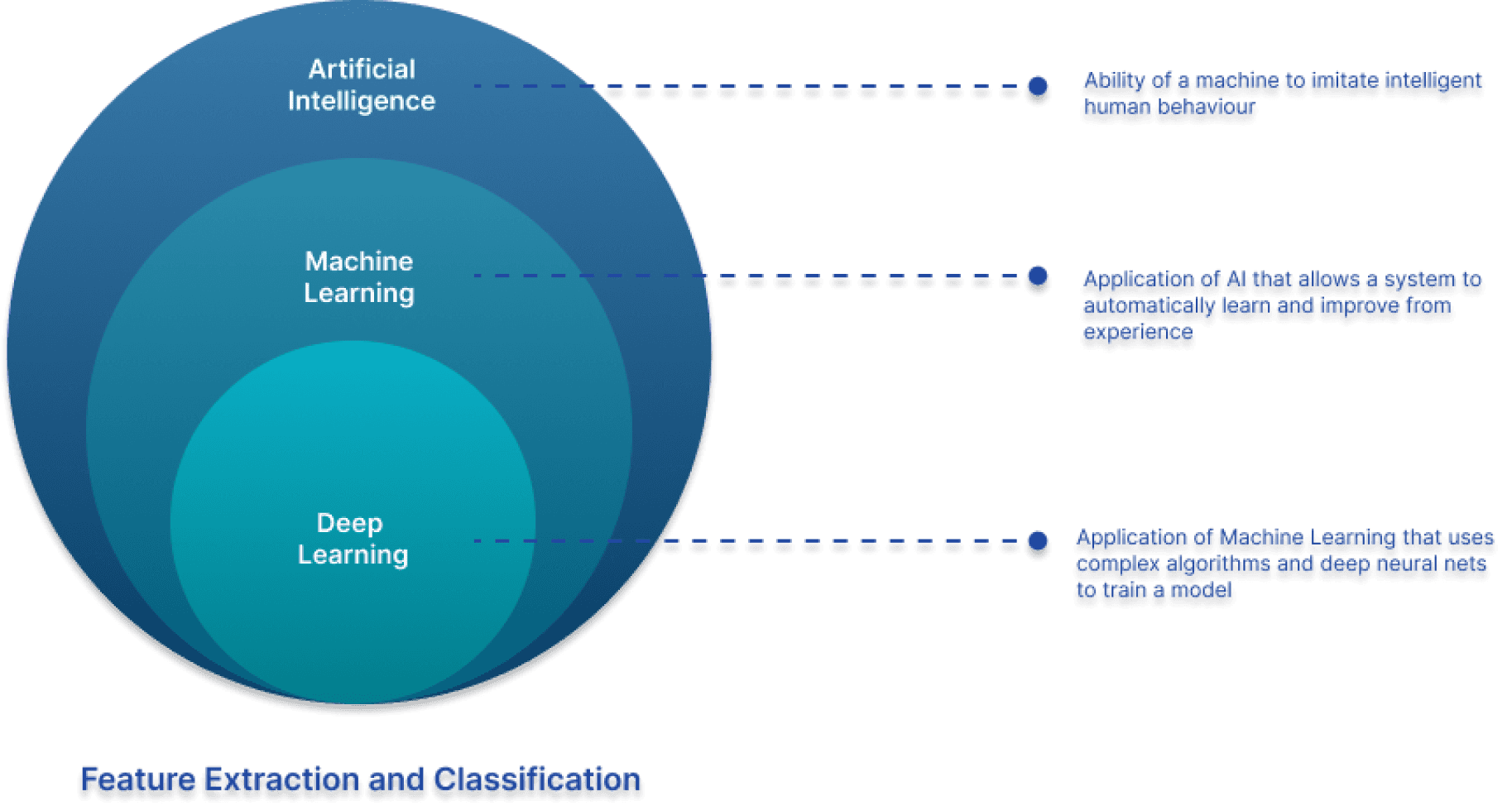
AI refers to the development of computer systems capable of performing tasks that typically require human intelligence. It encompasses various subfields, including ML and DL. AI algorithms aim to mimic human cognitive abilities, such as learning, reasoning, problem-solving, and perception.
- Unveiling Machine Learning (ML)
ML is a subset of AI that focuses on developing algorithms and models that enable computers to learn from data without being explicitly programmed. ML algorithms can automatically improve their performance through iterative learning processes, allowing them to make predictions or decisions based on patterns and insights derived from training data.

- Delving into Deep Learning (DL)
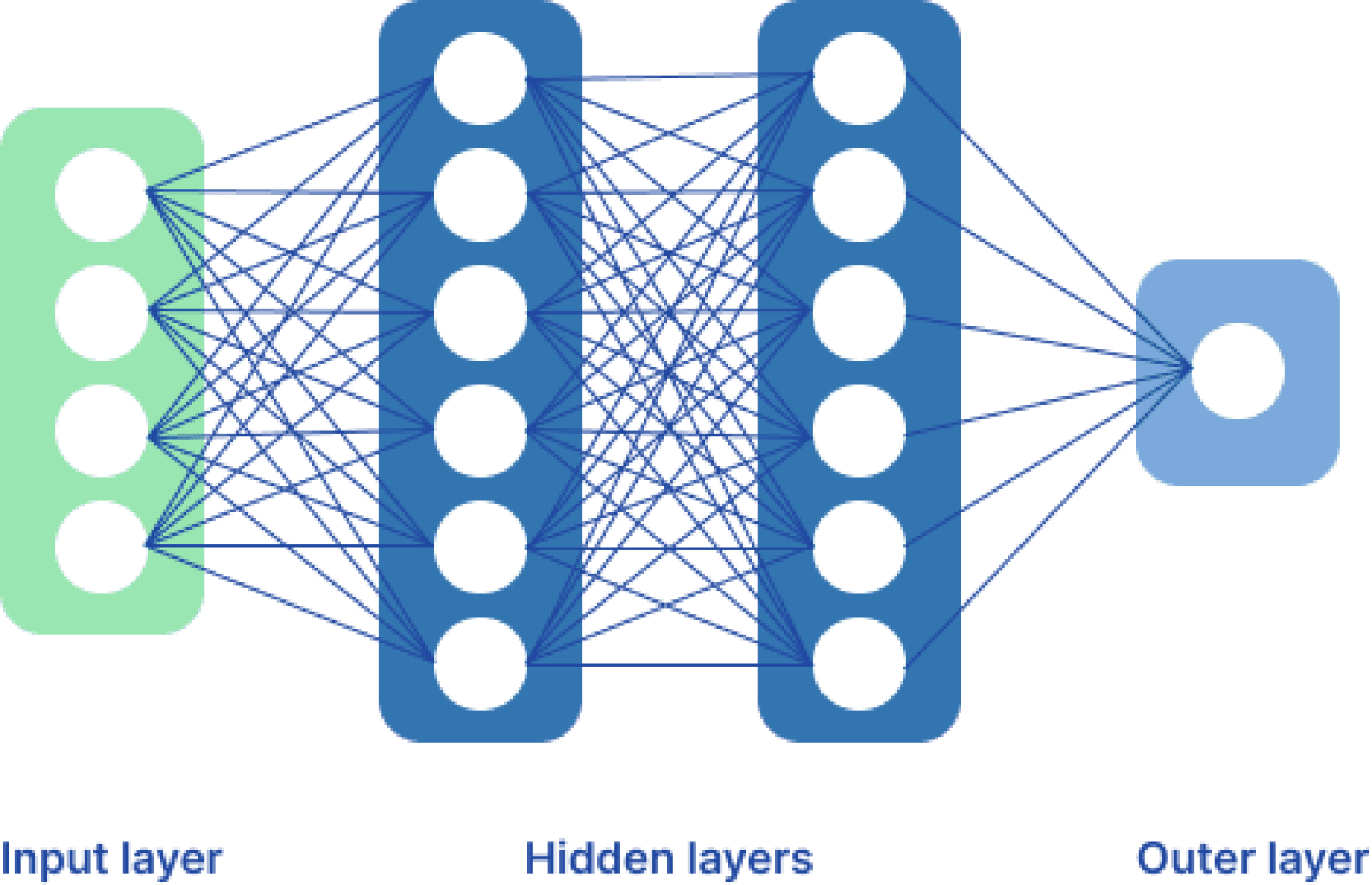
DL is a subset of ML that leverages artificial neural networks with multiple layers to learn and extract complex patterns from vast amounts of data. DL algorithms are designed to automatically discover intricate representations of data, enabling them to tackle sophisticated tasks such as image recognition, natural language processing, and speech synthesis.

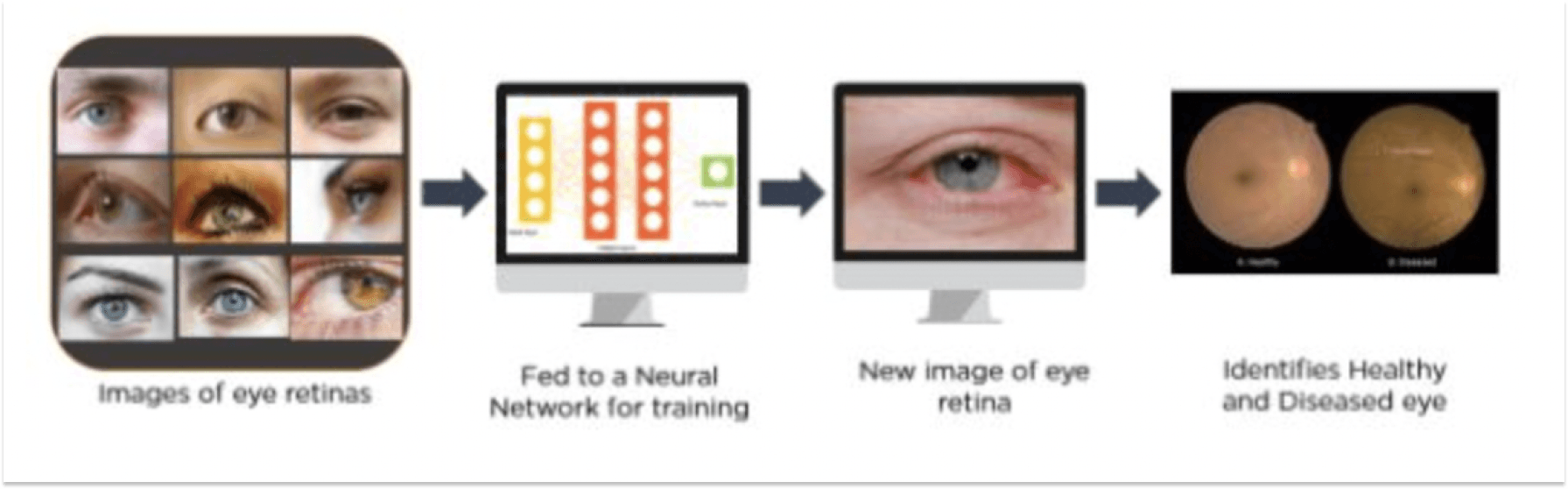
Here is an example of a neural network that uses large sets of unlabeled data of eye retinas. The network model is trained on this data to find out whether or not a person has diabetic retinopathy.
Relationship between AI, ML and DL
Natural Language Processing focuses on the interaction between computers and human language. Deep Learning has transformed NLP by enabling language understanding, sentiment analysis, machine translation, and question-answering systems.
Use Cases Across Industries
Deep Learning models, such as Recurrent Neural Networks (RNNs) and Transformers, can process and understand natural language, allowing for tasks like sentiment analysis, named entity recognition, and text classification.
Healthcare
- Medical Imaging Analysis: DL algorithms can analyze medical images, assisting in the early detection of diseases, such as cancer, and providing accurate diagnoses.
- Patient Monitoring: AI-powered systems can continuously monitor patient data, enabling real-time alerts for critical conditions and optimizing patient care.
- Drug Discovery: ML algorithms can expedite the drug discovery process by analyzing vast datasets, identifying potential compounds, and predicting their efficacy.
Finance
- Fraud Detection: ML algorithms can analyze transactional data to detect patterns of fraudulent activities, mitigating financial risks and enhancing security measures.
- Risk Assessment: AI-based models can assess creditworthiness, evaluate investment opportunities, and predict market trends, aiding in making informed financial decisions.
- Algorithmic Trading: ML algorithms can analyze market data, identify patterns, and execute trades, enhancing automation and optimizing investment strategies.
Retail
- Personalized Recommendations: AI-powered recommendation systems can analyze customer behaviour and preferences to provide personalised product recommendations, improving customer satisfaction and driving sales.
- Inventory Management: ML algorithms can analyze historical sales data to forecast demand, optimise inventory levels, and reduce stockouts or excess inventory.
- Visual Search: DL algorithms enable visual search capabilities, allowing customers to search for products using images, and enhancing the shopping experience.
Manufacturing
- Predictive Maintenance: ML algorithms can analyze sensor data to predict equipment failures, enabling proactive maintenance and minimizing downtime.
- Quality Control: AI-powered systems can analyze visual data to identify defects in manufacturing processes, ensuring product quality and reducing waste.
- Supply Chain Optimization: ML algorithms can optimize supply chain operations by analyzing data, predicting demand, and optimizing inventory, logistics, and procurement processes.

Conclusion
Artificial Intelligence, Machine Learning, and Deep Learning are transformative technologies with a wide range of applications across industries. From healthcare to finance, retail, and manufacturing, these technologies are revolutionizing processes, optimizing operations, and enabling data-driven decision-making. As businesses continue to embrace AI, ML, and DL, the potential for innovation and transformation is limitless. By leveraging the power of these technologies, organizations can gain a competitive edge, enhance customer experiences, and unlock new possibilities in the digital era.
[elementor-template id=”3498″]